
Soil pH describes how acidic or alkaline a soil is. It influences nutrient availability and the conditions in which roots grow. Knowing the pH helps you interpret the nutrient picture more clearly.
Why checking pH matters
A nutrient can be present in the soil without being readily available to the crop. Acidity is one factor behind that difference. Checking pH alongside N, P, and K helps you ask better questions about the soil rather than looking at each nutrient in isolation.
Agronomic background: Soil Acidity and Liming: Basic Information for Farmers and Gardeners.
Different crops, different needs
There is no single ideal pH for every crop. Interpret your result for the crop and soil you are working with. A pH reading alone does not determine a lime application rate; soil buffering and locally appropriate advice also matter.
Accurate soil pH testing with ASAD
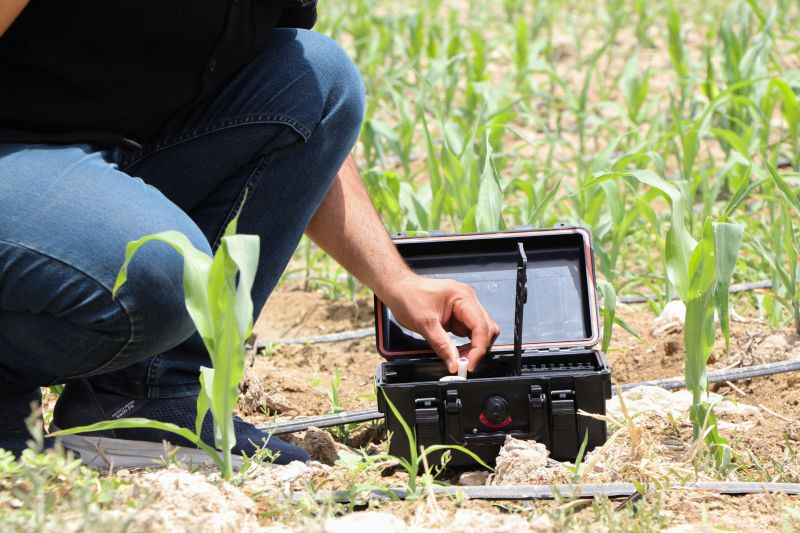
ASAD accurately measures soil pH in a portable soil-testing workflow, with accuracy comparable to soil laboratory results. Prepare and test your sample in the field, then see the result on your own phone using the ASAD app for iOS or Android.
The same system also measures the other core soil parameters, bringing N, P, K, and pH together. Follow the device’s sampling and testing instructions to get meaningful readings you can use in conversations about your farm.